Water Crisis in India 2025
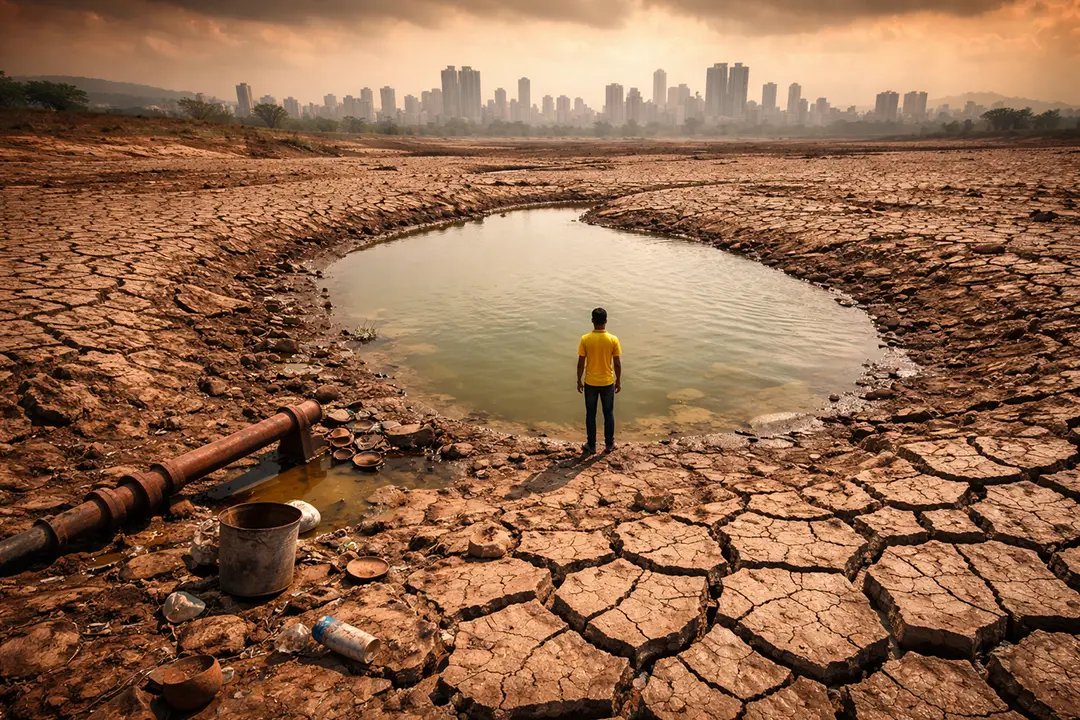
India is facing one of the most serious water crises in its history. Recent reports, government data, and media coverage show that groundwater depletion, contamination, climate change, and rising demand are pushing the country towards severe water stress.
This is not a problem of the past or the future. The situation continues to affect cities, villages, agriculture, industry, and public health across India today.
Water is essential for life, agriculture, economy, and ecological balance, yet it remains a limited resource. Although water covers nearly 70 percent of the Earth, only a very small portion is available as usable freshwater. India supports nearly 18 percent of the world’s population but has access to only about 4 percent of global freshwater resources. This imbalance has made water security one of the most critical challenges for the country.
According to the NITI Aayog Composite Water Management Index, India is going through one of the worst water crises in its history, with nearly 600 million people facing high to extreme water stress. The report warned that millions of lives and livelihoods are at risk if urgent steps are not taken.
Per capita water availability in India has fallen to nearly 1,100 cubic metres, which is below the water stress threshold. Experts have warned that demand for water may become twice the available supply by 2030 if current trends continue.
Ground Reality: Water Crisis Visible Across India
Recent reports from different states show that the crisis is not theoretical. It is already visible in daily life.
In Maharashtra, district administrations have prepared emergency plans for hundreds of villages expected to face drinking water shortages during summer. Tanker supply, borewell repair, and groundwater recharge work have become routine measures in many districts.
In Punjab, audit findings revealed that groundwater extraction has reached extremely high levels. Nearly 78 percent of the state is classified as over-exploited, making it one of the worst affected regions in the country.
Incidents of water contamination continue to show how unsafe systems directly affect public health. In one major case, sewage entered the municipal water supply in a large city, leading to deaths and hundreds of hospitalisations. Such incidents highlight that the crisis is not only about shortage, but also about safety.
Extreme weather is also worsening the situation. Recent heatwaves across India increased water demand while reducing availability. Irregular rainfall, floods, and drought conditions in different regions show how climate change is making water management more difficult.
These examples confirm that the water crisis in India is not a future risk. It is already part of everyday life.
Main Reasons for Water Crisis in India
The water crisis is caused by a combination of natural and human-made factors. These factors are connected and have intensified over the last few decades.
1. Overdependence on Groundwater
India is the largest user of groundwater in the world.
Groundwater supports drinking water, irrigation, and industry.
More than 85 percent of rural households depend on groundwater for drinking water. Agriculture also relies heavily on tube wells and borewells.
In many states, groundwater is being used faster than it can be naturally recharged. Regions in Punjab, Haryana, Rajasthan, Tamil Nadu, and parts of Karnataka are seeing continuous decline in water tables.
In some areas, extraction is higher than recharge, making the situation unsustainable.
2. Inefficient Water Use in Agriculture
Agriculture consumes the largest share of freshwater in India.
Flood irrigation methods waste large amounts of water.
Water-intensive crops such as paddy and sugarcane are often grown even in dry regions, which increases pressure on groundwater.
Research shows that rice cultivation alone requires huge quantities of water and has contributed to groundwater decline in several states.
3. Pollution and Contamination
Water scarcity is not only about quantity. Quality is also a major concern.
A large portion of India’s surface water is polluted due to sewage discharge, industrial waste, and agricultural chemicals. Many rivers receive untreated wastewater from cities and industries, making the water unsafe for drinking and farming.
Poor water quality increases health risks and reduces the amount of usable water available.
4. Climate Change and Irregular Rainfall
India depends heavily on monsoon rainfall. Any change in rainfall pattern directly affects water availability.
Erratic monsoon, heatwaves, floods, and droughts are becoming more frequent.
These events damage infrastructure, reduce groundwater recharge, and increase demand for water.
Climate extremes can create both floods and shortages in the same year, making water management more difficult.
5. Population Growth and Urbanisation
India’s population has crossed 1.4 billion.
Rapid urban growth has increased demand for water beyond the capacity of existing systems.
Large cities such as Delhi, Bengaluru, Chennai, and Hyderabad depend on groundwater and distant rivers. Rising demand combined with ageing infrastructure leads to frequent shortages.
Impact of Water Crisis in India
The water crisis affects every sector of society.
Public Health
Millions of people still lack access to safe drinking water.
Unsafe water can lead to diseases such as diarrhoea, cholera, and typhoid.
Poor sanitation and contaminated supply increase health risks, especially in rural and low-income areas.
Agriculture and Food Security
Water shortage reduces crop yield and farmer income.
Irrigation problems affect food production and can increase food prices.
Agriculture remains highly dependent on groundwater, which makes the sector vulnerable.
Economic Impact
Experts have warned that water shortages could reduce India’s GDP significantly in the coming decades if the crisis continues.
Industries such as power generation, manufacturing, and steel require large amounts of water and are highly sensitive to supply disruptions.
Environmental Damage
Lakes, rivers, and wetlands are shrinking due to overuse and pollution.
Loss of water bodies affects biodiversity and increases human-wildlife conflict as animals search for water.
Social Conflict
Water disputes between states, cities, and farmers are increasing.
Competition for limited water resources can create political and social tension.
Government Reports and Policy Warnings
Several government and research reports have highlighted the seriousness of the crisis.
Key warnings from official data include:
- Hundreds of millions of people face high to extreme water stress
- Large percentage of surface water is contaminated
- Water demand may exceed supply in the coming years
- Groundwater levels are declining in many states
- Water shortage could affect economic growth
These warnings show that the crisis is not temporary. It requires long-term solutions.
What India Needs Now
Experts agree that solving the water crisis requires long-term structural change.
- Efficient irrigation methods
- Protection of groundwater
- Wastewater treatment and reuse
- Better urban water management
- Restoration of lakes and ponds
- Climate-resilient planning
- Public awareness and community participation
Water conservation cannot depend only on government programmes.
It requires action from citizens, farmers, industries, and local authorities.
Water Availability in India – District Level Map and Data
Water shortage is no longer limited to a few drought-prone regions. Many districts across India are already facing groundwater depletion, unsafe drinking water, seasonal shortages, and increasing demand. To understand the situation better, this page provides a district-level water availability map along with searchable data based on official reports.
The interactive map below allows you to check the water availability status of your district or state. You can also use the search tool to find detailed information about groundwater condition, water stress level, and availability category.
Below the map, you will find a detailed article explaining the causes of the water crisis in India, latest data from government reports, and the real ground situation across different states. The purpose of this page is to make reliable information easily accessible so that people can understand the seriousness of the water situation in their own region.
Search district-wise water availability
Search by district or state to explore per capita water availability for 2025 and 2050.